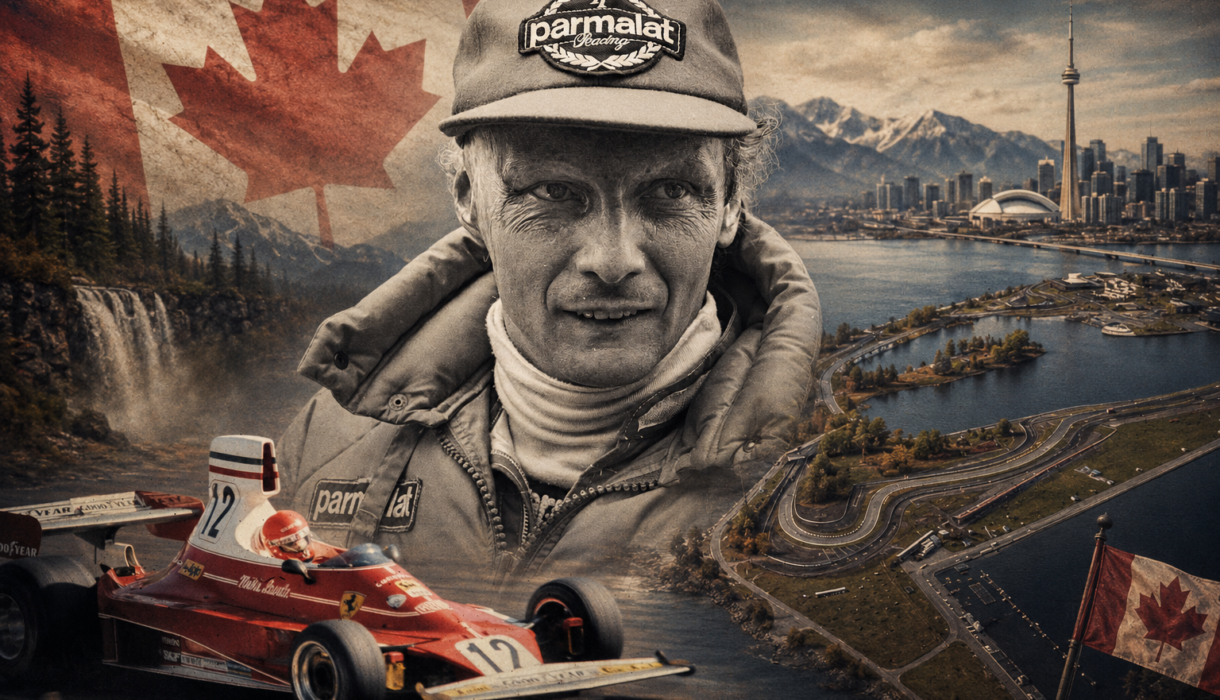

Niki Lauda finished his highly successful and praised Formula 1 career with three titles, 25 wins and 54 podiums but only one of them came at Canada. Why was that the case? Is there more behind the headline results?
When the name Niki Lauda appears in public discourse, some things come straight to mind. Three world championships, His large part in Ferrari’s 70s revival, his near-fatal Nürburgring crash in 1976 and the whole of that season (Rush certainly helped the newer generation for that) and many more.
The very much missed Austrian has a legacy that is one of the greatest in the world of Formula 1, but when doing some research for the upcoming Canadian GP, i realized something: Niki Lauda never won in Canada. The only such great driver to never win there, despite entering nine races.
In fact through 11 seasons his resumé reads two non appearances, one DSQ, six retirements and only a single podium. Why is that the case, i wondered. So i decided to dig deep and find out exactly why, was Niki Lauda’s record in the Canadian GP so appaling?
Follow Motorsport Storyteller on Facebook by clicking here!
1972: Disqualification
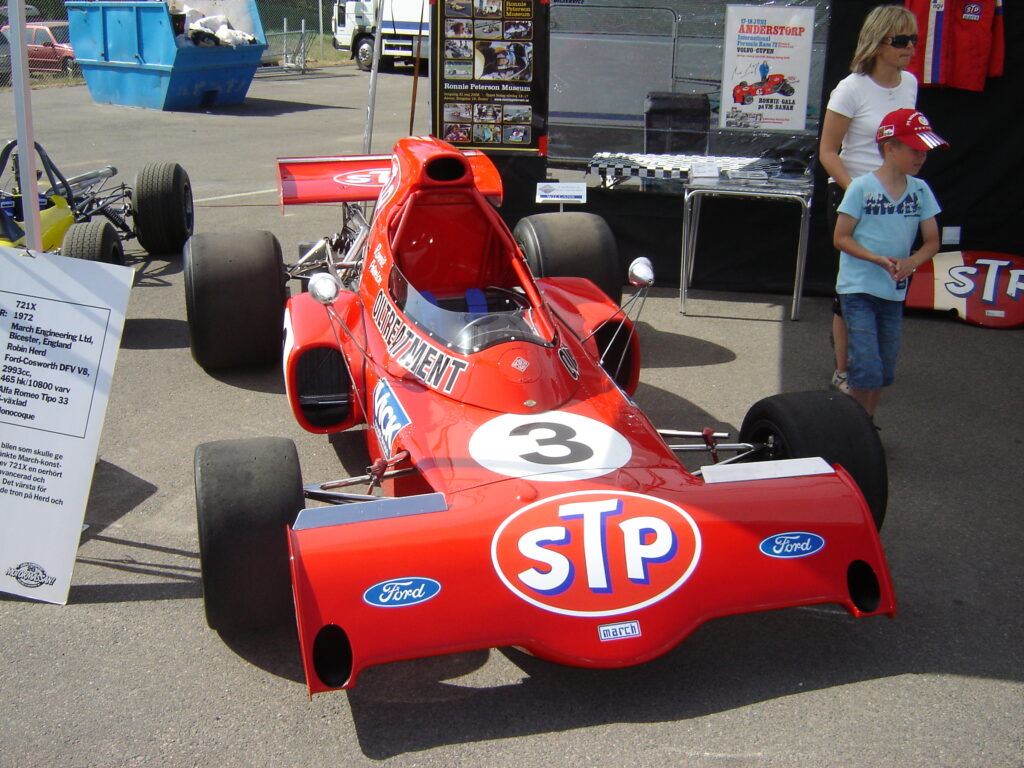
A March 721 driven by Ronnie Peterson in the 1972 season. Niki Lauda also drove that same car.
After making his Formula 1 debut for March at his home race in 1971, Lauda continued with the team into 1972, having famously ”gambled” his way into Formula 1, by taking a loan to fund his career. His season though paled in comparison to teammate Ronnie Peterson’s.
While the ”Super Swede” as he would be known later on, scored 15 points, taking a third place at Germany, Lauda did not manage even a single point, although as always results do not tell the full story. That years Canadian GP though proved to be his and the team’s absolute lowest point.
Having started from 19th, while Peterson started from 3rd, Lauda was running 15th and last, having lost around 15 laps at the start of the race with a blocked throttle slide, a result of dirt and dust thrown up after the first corner of the opening lap.
Then on Lap 64 the Austrian was disqualified due to receiving outside assistance after a spin. As luck would have it Ronnie Peterson had been disqualified only three laps prior to that, for being pushed back to the pits and in the wrong direction at that.
1973, 74, 78, 82, 83 & 85: Retirement
Most of Lauda’s efforts in Canadian soil ended in retirement. The first came in 1973, with that race being famous for being the first in Formula 1 history to feature a safety car, whilst the chaos that created being infamous. Lauda actually dominated the early wet part of the race, having started third. His race though came to an end on lap 62, due to a broken gearbox, with Lauda running 4th.
His luck was not better in 1974, as Lauda -now a Ferrari driver and race winner- was leading from the start, enjoying a comfortable gap to 2nd placed Emerson Fittipaldi, when on lap 67 he ran over some debris, a result of John Watson losing control of his Brabham after a lower ball joint on the front suspension fractured. No yellow flags were shown when Lauda passed the spot a few moments later and thus he lost control of his Ferrari, crashing and handing the lead over to eventual winner, Emerson Fittipaldi, whom he had reigned in for almost the entirety of the event.
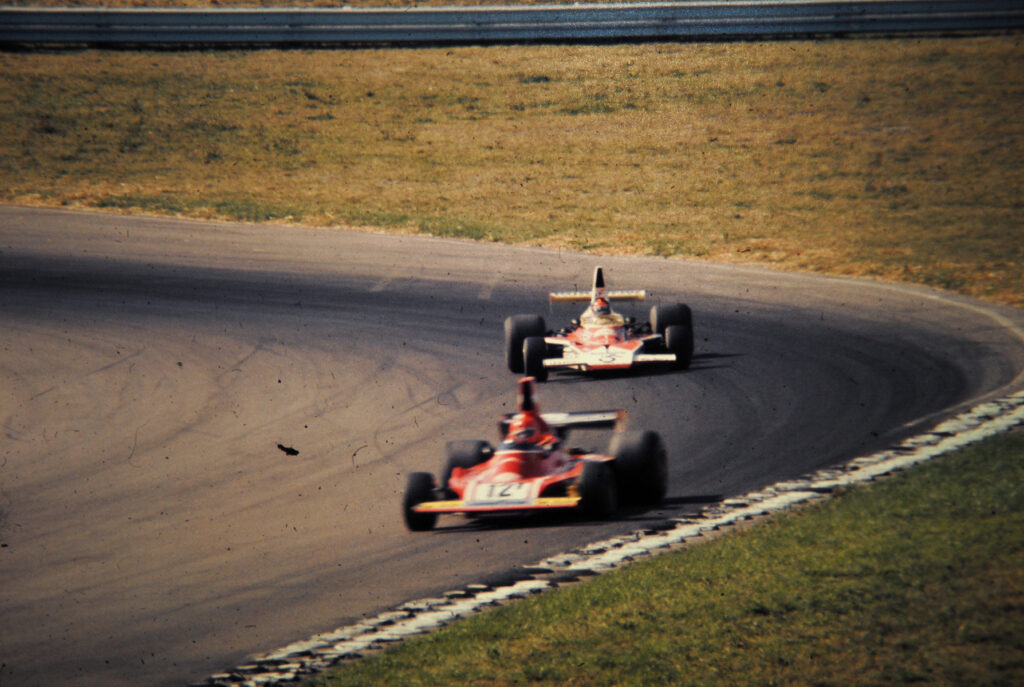
Lauda may have broken his ”curse” in 1975, as he romped home with a dominant title win, but there was no Canadian GP that year, owing to a financial dispute between the race promoters at Mosport Park (then host of the race) and the Formula One Constructors’ Association (FOCA). FOCA demanded an increase in the race purse for the F1 teams. When the organizers at Mosport refused to pay the higher amount, the race was cancelled.
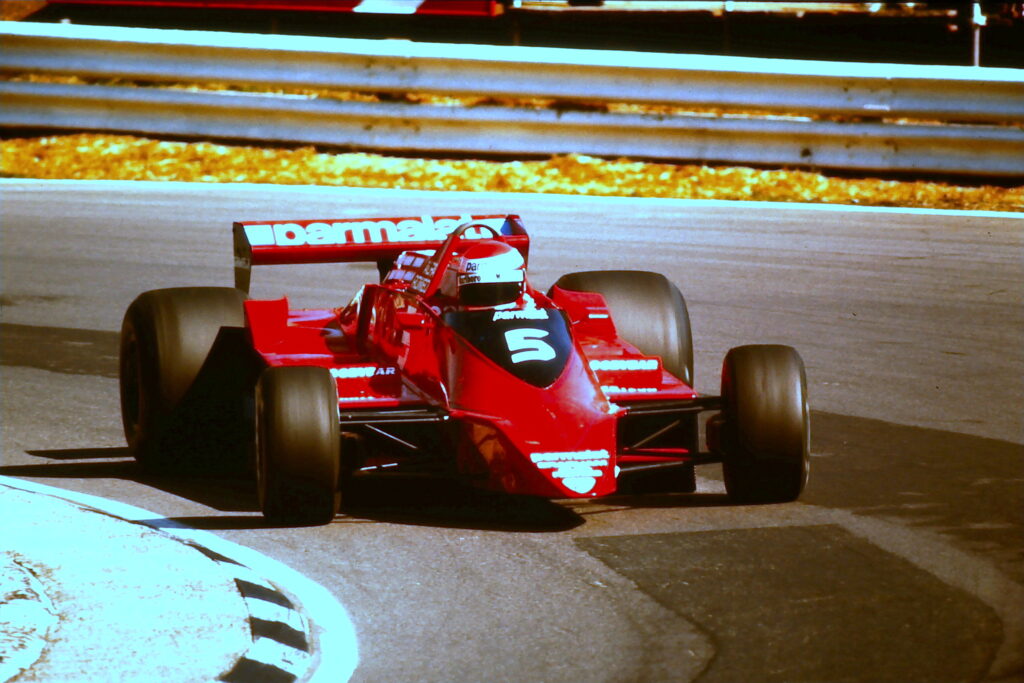
In 1978, now with Brabham, Lauda enjoyed both sides of the F1 coin. The BT45C and the BT46 were very competitive, though unreliable. This led to the Austrian finishing only seven races from the total of 16, all of them on the podium, with two being wins, in the now famous Swedish GP, the only race of the ”Fan-car” BT46B and in the Italian GP.
As you can guess, his Canadian GP, the first at Circuit Île Notre-Dame, ended in retirement. Having qualified a middling 7th, three places behind teammate John Watson, Lauda’s race lasted only five laps, before his brakes failed.
Four years later, after having retired and then returned to the world of Formula 1, now with McLaren, Lauda had already won a race at Long Beach, though heading to Round 8 at Canada, he was on a run of a DSQ and two retirements.
Having qualified a measly 11th, two seconds slower than poleman Didier Pironi and six places behind teammate Watson (again), his race lasted only 17 laps, retiring with clutch failure, in what was a sombre affair, due to the tragic death of Riccardo Paletti.
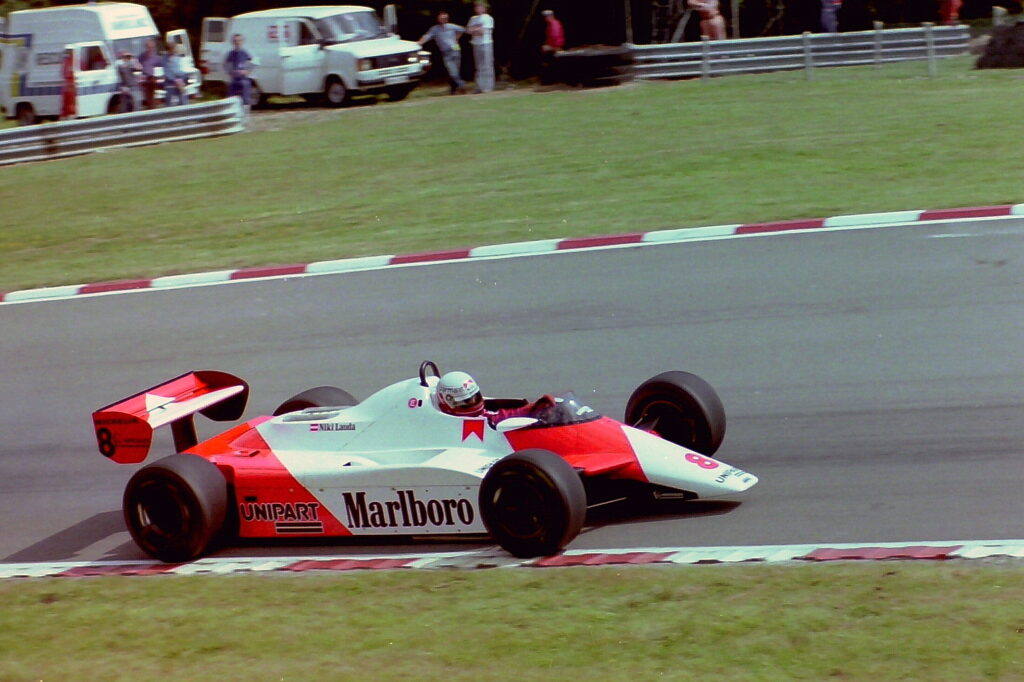
The following season things turned out to be worse, as McLaren suffered through most of the season in the -now three years old- MP4 (upgraded to MP4/1C) with Ford Cosworth engines, as Ferrari, Renault and Brabham’s Turbo-powered cars stormed the season. The team reached its lowest of lows at Monaco, where both Lauda and Watson failed to qualify, the only such time in McLaren’s history.
At that year’s Canadian GP, Lauda qualified 19th, one place ahead of Watson, a stunning 4.9 seconds slower than poleman René Arnoux and his race lasted only 11 laps, when he spun off and retired, while 15th.
Finally in 1985, Lauda’s last season in Formula 1, he failed to finish the Canadian GP yet again, as in total, the then 36-year old suffered seven DNFs from the first eight races and 11 out of 14 races he started in total. In Canada, having started 17th, he had climbed up to 8th during the first half of the race, but suffered from an engine failure on Lap 37, as the TAG-Porsche engine was described as ”blowing out its coolant”, in what was another ultimately disappointing weekend.
1976: 8th place finish
One of only two race finishes Lauda recorded in Canada, was in 1976. Having made a miraculous return to Grand Prix racing only a few weeks before, at the Italian GP, after his Nürburgring crash, where he recorded a heroic 4th place finish.
The story did not continue as planned in Mosport Park though for the following Canadian GP, as Ferrari was outclassed by other teams, primarily McLaren, with title rival James Hunt winning convincingly from pole. Lauda had qualified 6th and could only climb as high as 5th, before suddenly slowing down on Lap 58, due to ”the right rear suspension top link working loose, altering the camber on that wheel from corner to corner”, as described by Alan Henry.
Lauda crawled home to an eventual 8th place finish, nearly lapped by Hunt.
1977 & 1979: Walking away
If i had a nickel for each time Niki Lauda decided to leave his team just before the Canadian GP, i would have two nickels. Which is not a lot, but it’s weird that is happened twice.
It is well-known (and a topic for another article) that Lauda’s relationship with Ferrari became ever more difficult and distant, after his horrific 1976 Nurburgring Nordschleife crash. He felt somewhat betrayed by the attempted block to his return, famously demanding a third car be entered, holding Ferrari accountable to his contract terms and having a bad relationship with new teammate/replacement Carlos Reutemann.
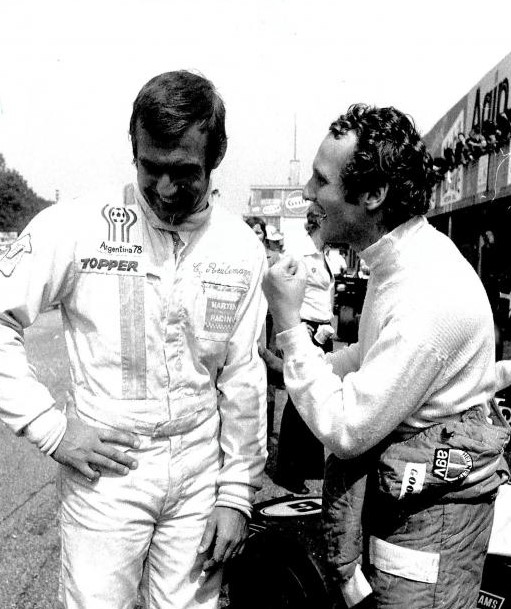
What really started the countdown to Lauda and Ferrari’s relationship ending though, was his decision to withdraw from ”that” season-finale in Fuji, with him deeming the conditions too dangerous. The reaction in Italy was harsh (as is the custom) with many Tifosi calling him a coward and even Enzo Ferrari considered ditching him.
As a result, the angered Lauda embarked on a personal ”revenge” tour for 1977, ultimately winning his second world title. Having clinched the championship with two races remaining and tired from constant tensions within the team, Niki decided to skip both the Canadian and Japanese GPs and told Ferrari he was leaving for Brabham. Enzo tried convincing him otherwise but called him a traitor for moving to Bernie Ecclestone’s team.
In Tom Rubython’s 2011 book In the Name of Glory, Lauda is quoted as saying: ”We never could stand each other, and instead of taking pressure off me, they put on even more by bringing Carlos Reutemann into the team”. Of course the subject of Lauda and Ferrari’s relationship goes far deeper than that, but this will inevitably be the subject of another article in the future.
As for the 1979 race, it is quite the famous and well-known story that Lauda, cut his first run in practice short, not wanting to ”continue the silliness of driving around in circles”, as he grew tired of Brabham’s increasingly uncompetitive and unreliable car throughout the year, promptly informing team principal Bernie Ecclestone, that he wished to retire immediately.
1984: 2nd place finish
The only time Niki Lauda stepped on the podium in Canada, was in his final title-winning campaign of 1984. Having qualified 8th, typically low for his time in McLaren, he focused his efforts on the race day (equally typically) keeping his rhythm down on the opening phase to conserve fuel.
After around 20 laps though, he ramped up his pace, carving through the field (including teammate Prost) to find himself second to eventual race winner, Nelson Piquet in the Brabham. By that time though the Brazilian had an ample buffer, slowing down, allowing Lauda to get within two seconds of him at the chequered flag.
This concludes Niki Lauda’s ”appaling” Canadian GP record story. My personal thoughts are that Lauda was extremely unlucky not to have won in either 1973 or 1974, having dominated parts of these races and would have been in prime place to win, should then 1975 race have happened.
He of course made mistakes, such as in 1982 and suffered through reliability issues in the other races, which though he had slim chances to win regardless. Finally in 1984 he could have possibly caught and passed Piquet if he qualified a bit higher, but we’ll never know.
I sincerely hope you enjoyed reading this piece and if you made it to the end, i appreciate each and every one of you. Motorsport Storyteller out!