
Before Fittipaldi, Piquet and Senna, there were others who paved the way.
Recently the motorsport world learned about the passing away of Hermano da Silva Ramos, who was the oldest living Formula 1 driver, at the age of 100.
When the conversation revolves around Formula 1 and Brazil, most inevitable gravitate around Ayrton Senna, Nelson Piquet, most recently Felipe Massa and Gabriel Bortoleto. Maybe throw in Emerson Fittipaldi, the nation’s first world champion and the ever popular Interlagos.
But racing in Latin America is way older than even the latter. Ramos was Brazil’s highest points scorer until ”Emmo” debuted with Lotus in 1970, having scored two points with a fifth place at the 1956 Monaco GP for Gordini.
The first ever organised races in Brazil occured way back in the early years of the 20th century. Sources suggest that the first unofficial races took place around 1902-1905, but the first officially sanctioned race, was in 1908 at Sao Paulo. However the first races we could identify as ”Grand Prix” started in the 1930s.
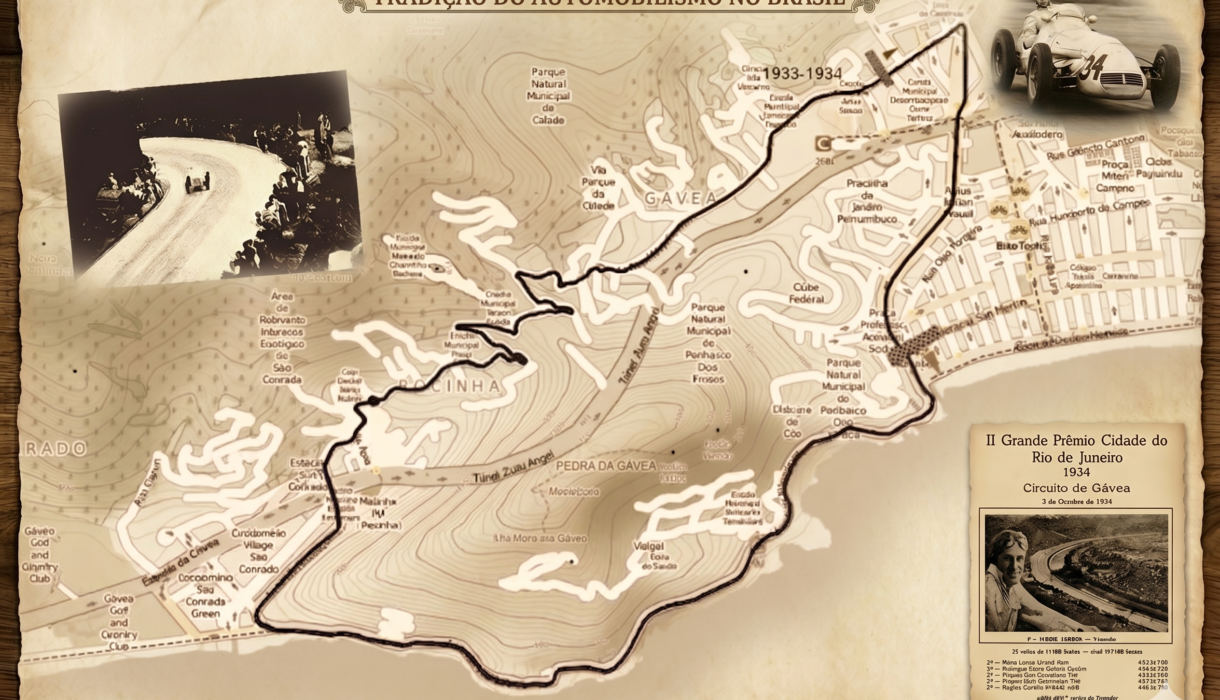
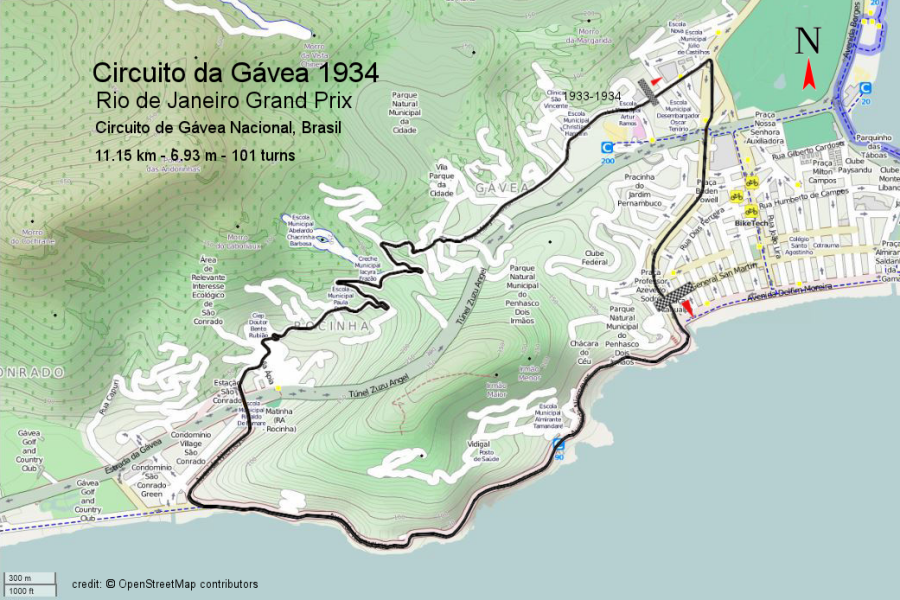
Automóvel Clube do Brasil organized the 1st ”Rio de Janeiro Grand Prix” in 1933, which took place at the Gavea circuit or as its full name was ”Circuito da Gávea”. The race was the first to have been given the ”green light” from the FIA and was run in October, won by Manuel de Teffé, who drove an Alfa Romeo 6C 1750.
The purpose of this article though is not to examine the birth of racing in Brazil, but instead -as the title suggests- the early Grand Prix pioneers from the country. Because without them, we may as well not have had Fittipaldi, Senna etc…
Manuel de Teffé
As racing was -and still is mostly- a wealthy man’s hobby, it is no surprise perhaps that one of the earliest standout Brazilian drivers, was a diplomat. Manuel was -surprisingly- born in Paris, where his father Oscar, was serving his country as a diplomat in France, in 1905.
His interest in cars and speed was instilled early on in his life and by the age of 20 he was already participating in races in Italy, achieving pretty good results in his class. He participated in the famous Mille Miglia twice in 1928 and 1929 and was also instrumental in getting Brazil recognized in the international racing stage, by helping organize the aforementioned 1933 race in Gavea and subsequently inviting foreign racing drivers to participate in the following years. Notable racers that turned up to race in Brazil were Hans Stuck, Achille Varzi and Carlo Pintacuda among others.
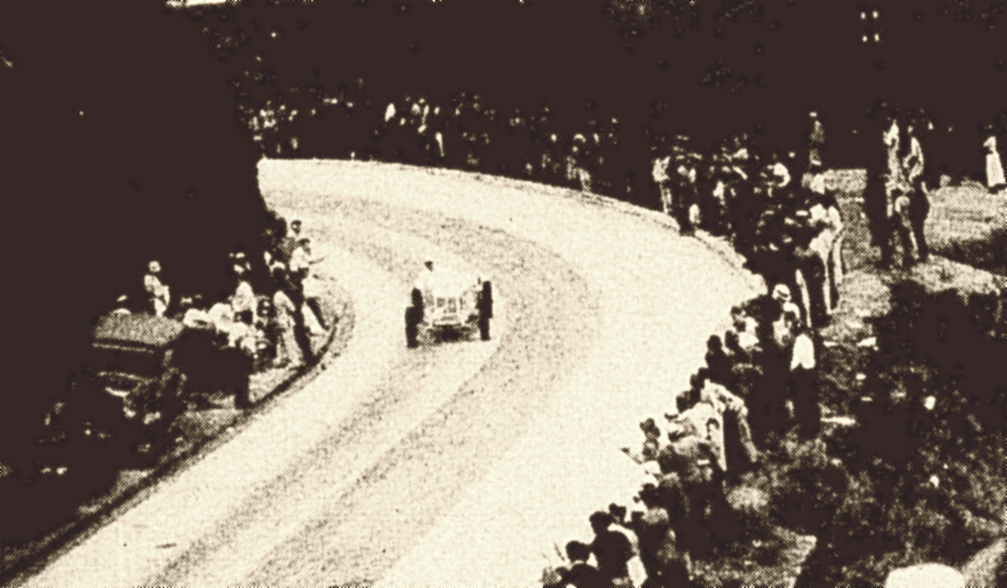
He went on to win the 1933 race and also was a winner of the 1939 edition, hosted on October 29, nearly two months after the outbreak of World War II, a war in which Brazil did not take part at that stage.
De Teffé, also had participated in the full 1938 voiturette season, driving for Scuderia Ambrosiana.
He also took part in other notable races of the era, such as the Tripoli GP, the Argentine GP and the Targa Florio, with his racing career lasting until 1960, when he took part in his last race of any kind, although post-war he was not as active.
While not as popular as the next driver on the list, as he was often considered a wealthy expatriate, rather than a true Brazilian, his exploits certainly were pivotal in getting Brazil’s motorsport scene running.
Irineu Correa
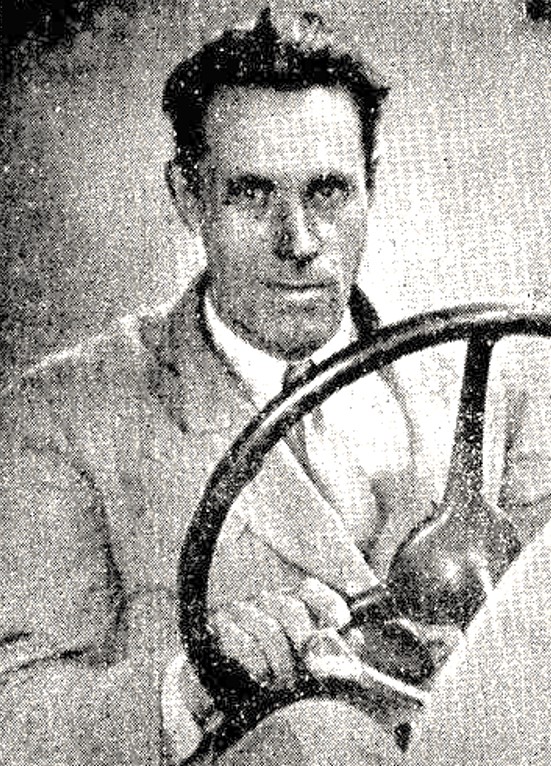
Born in 1900, on the town of Petrópolis, Correa was a gifted racer and by all available evidence, the first Brazilian to win a race abroad, having won at a Chester Fair event in 1920, driving a Studebaker. He had joined the car maker after many hardships, having secretly left his home country at the age of 13, to go to the USA.
He returned to the country with Studebaker in 1923, headquartered in Rio de Janeiro, serving as chief mechanic responsible for maintaining all of the company’s automobiles. He then went on to win a number of events in the mid-1920s, including the Circuito de Outono race, held on the streets of Porto Alegre in 1927, a win that established him as a leading figure in Brazilian motorsport.
He was also instrumental in the creation of the country’s automotive federation, the Automóvel Clube do Brasil, being one of its founders. He gained further popularity be achieving a second place in the 1928 Argentine National Grand Prix, this being his second attempt at a tough race. His greatest moment though, was winning the 1934 Rio de Janeiro Grand Prix, driving a Ford V8, one that was somewhat overshadowed by the fatal accident of fellow racer, Nino Crespi.
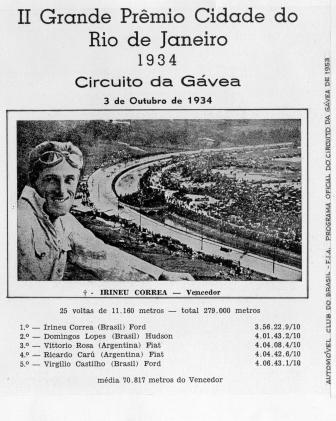
Sadly his very own career would tragically end only a year later, in the same race. Correa was the favourite to repeat his 1934 triumph but he suffered a crash that proved to be fatal, with the full circumstances still not known. The ”Lion of Petrópolis” would have almost certainly participated in the post-war racing scene and possibly could have been the first Brazilian to enter the Formula 1 World Championship, given he would have been only 50 years old had he lived.
Chico Landi
The first driver from Brazil to enter a Formula 1 race, having done so at the 1951 Italian GP, Landi was already well known in his native country by then. Born in 1907, at São Paulo, he started racing in the early 1930s and was a friend of De Teffé’s and Correa’s. He made his debut at the 1934 Rio de Janeiro GP, driving a Bugatti.
He immediately established himself as the most popular driver in the country, after the passing of Irineu Correa in 1935 and went on to be an active racer prior to the outbreak of WWII. His first victory of note however would not come until 1941, when he won the Rio GP at the Gavea circuit, a feat he repeated two more times, in 1947 and 1948.
After impressing against European drivers in the 1947 Temporada Argentina series, he was invited to participate in that year’s Bari Grand Prix, where he retired. He returned the next year however, going on to win the race, driving a Ferrari 166SC, against top-level competition. Rivals included Tazio Nuvolari, Luigi Villoresi, Giuseppe Farina, Achille Varzi, Piero Taruffi and eventual two-time Formula 1 champion, Alberto Ascari, who finished 2nd that day.
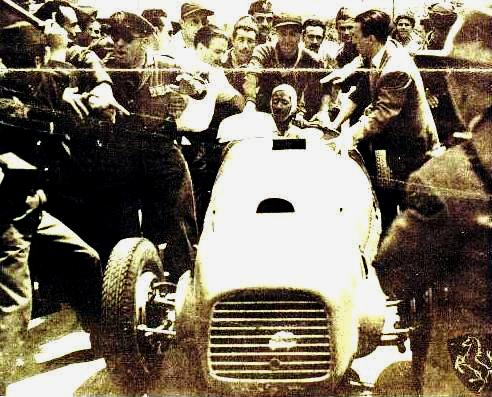
Landi then went on to participate in a lot of races during the 1950s, taking part in Sportscar, Formula 2, Formula Libre and most important for this article, six Formula 1 races. He retired from three of them, was 9th at the 1952 Dutch GP and 8th at the Italian GP and scored his only points finish, at his last one, the 1956 Monaco GP, getting 1.5 points after a shared drive to 4th place with Italian Gerino Gerini, aboard a Maserati 250F.
Despite that, he remained succesful at other categories, winning a myriad of races and events, all the way up to 1969 II Prova Governardor Paulo Pimentel race, where he won driving a Chevrolet Opala 3800, at the ripe age of 62. After retiring from racing in the early 1970s, he became a leading figure in administrating Brazilian motorsport. He also ran a garage and spare parts business in his hometown São Paulo and, in later years he became the general manager for the Interlagos circuit, serving in the office until just before his death, in 1989.
Gino Bianco
Born in 1916 in Italy, Bianco moved with his parents to Brazil at the age of 12, with his father having opened a candy shop. A young Gino fell in love with racing during his time as a mechanic’s apprentice, as he was amongst the spectators for the inaugural 1933 Rio GP.
He started racing in hillclimb events that same year and he went on to become a four-time Hillclimb champion, achieving his titles in 1948, 1949, 1951 and 1953. He also took part in every single Rio GP between 1938 and 1941, though failing to finish any. In 1952, he raced in the last four races of the Formula 1 season, driving a Maserati A6GCM for the Escuderia Bandeirantes team, which was backed by Chico Landi and Uruguyan racer and businessman, Eitel Cantoni.
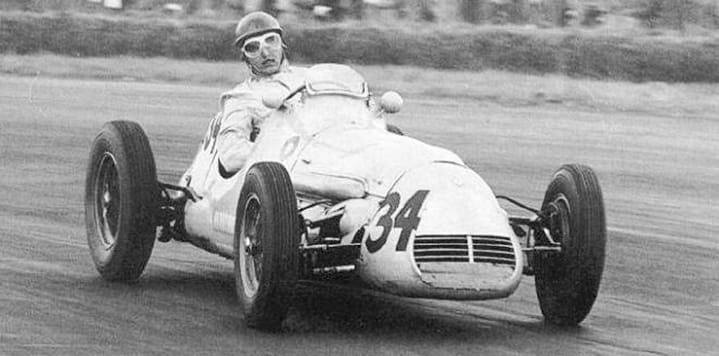
In his debut, at the 1952 British GP, he finished 18th out 22 finishers, seven laps down on winner Alberto Ascari, the only time he saw the chequered flag, despite showing promise, having qualified 16th out of 34 entrants at the German GP, hosted at the mighty Nürburgring Nordschleife and also out-qualifying Landi at Zandvoort, to start 12th out of 18 cars.
He retired from racing shortly after grabbing his last hillclimbing title, after a near-fatal accident, having already been involved in two other fatal accidents in prior years, making only a one-off appearance at the 1961 500 Quilômetros de Interlagos.
Hermano da Silva Ramos
The very reason i wrote this article. Ramos was born in Paris, in 1925. A dual-citizen, due to having a French mother and Brazilian father, he moved to Rio de Janeiro in the years after WWII and started racing in 1947, driving an MG TC. His first serious racing attempts though came a few years later, when he began racing an Aston Martin DB2/4 in France, competing in various sportscar races, coming 2nd at the 1953 Paris Cup.
He then won the 1954 Coupe de Montlhéry and competed for the first time in the 24 Hours of Le Mans, alongside Jean-Paul Colas, in that Aston Martin. He took part in four Le Mans’, never completing a full race though, also having taken part in the 1956 Mille Miglia.
Ramos also started racing in single-seater racing around that time, making his Formula 1 debut in the 1955 Dutch GP driving a Gordini Type 16, where he finished a respectable 8th out of 11 finishers, 8 laps down on winner Juan-Manuel Fangio.
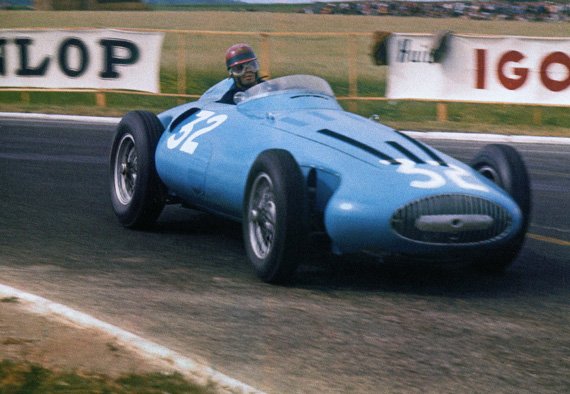
He raced in a further six Grand Prix, all with Gordini, achieving a best finish of 5th at the 1956 Monaco GP, which gave him his only two points in F1 as well as the French team’s last ever in the sport, with Ramos achieving a further 8th place at the French GP, retiring from every other race entered.
Ramos was by all means a respectable driver, if not that successful, having also entered many non-championship and Formula 2 races, finishing 5th in the 1956 8° BRDC International Trophy at Silverstone, 4th at the 1959 14th BARC Aintree International 200 and 2nd at the Formula 2 Grand Prix of Pau in 1958, driving a Cooper T45.
His final race came at Guanabara for the Rio GP in November 1960, where he finished 2nd at the wheel of a Porsche RS 1500, before retiring for good.
Fritz d’Orey
Fritz d’Orey was born in 1938 in Sao Paulo, son of a Packard car dealer. While his early years have few details available, we know he started racing in his early teenager years with a Porsche Spyder, before purchasing an ex-Chico Landi Ferrari 375 F1, fitted with a Chevrolet Corvette V8 Engine.
This might sound unusual, but these kind of modifications were common at the time, as European racers that competed in series like Argentina Temporada or the South American Mecanica Continental Championship, later sold their cars on to local racers, with mechanics often having neither the money or the know-how to service Ferrari, Maserati or Bugatti engines. Instead they often switched them out for Ford or Corvette engines.
In subsequent years he went on to achieve much domestic and regional success, winning races in Argentina and Uruguay, as well as the Sao Paulo and Brazilian championships. Information about specifics are relatively sparse, but he won the Sao Paulo championship in 1957.
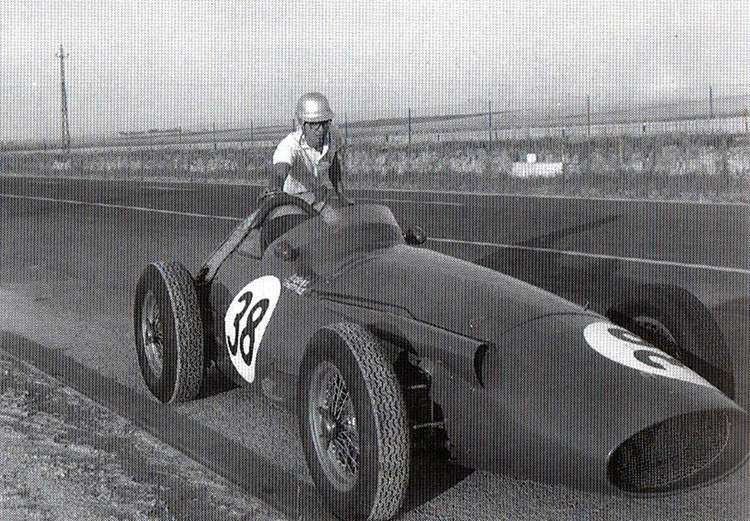
He went on to win the 1958 500 km de Interlagos in the Formula Libre category and the 1958 Circuito da Barra da Tijuca. The following year he entered the world of Formula 1, with Scuderia Centro Sud, driving a Maserati 250F, a car now in its fourth season of Grand Prix racing.
His first race was the 1959 French GP, where he finished 10th out of 11 finishers, 10 laps down on winner Tony Brooks. This was his only finish, as he retired from the following race at Aintree and from his last race, the season finale at Sebring, where he raced for Tec-Mec/Camoradi USA.
His career though seemed to have an upwards trajectory, but it was ulimately cut very short, as after finishing 6th in the 1960 12 Hours of Sebring, driving a Ferrari 250 GT SWB Berlinetta, he suffered a horrific crash while practising for Le Mans. He hit a tree at 270kph, splitting in two and Fritz suffered head injuries, with some newspapers reporting he had died.
He was hospitalized for eight months and after fully recovering, he quit racing at just 22 and returned to Brazil, where he worked in his father’s construction and garage business. Later on in his life he occasionally raced Ferraris in the Ferrari Challenge and some historic events. He remains a big what-if of Brazilian racing.
Formula 1 went the full 1960s decade without a Brazilian driver participating, before the debut of Emerson Fittipaldi, at the 1970 British GP, with Team Lotus. Subsequently Brazil has seen a total of 29 drivers, of which three have been World Champions and has celebrated 101 wins, spread across six drivers, with the country now rooting for Gabriel Bortoleto, the country’s latest bright F1 driver, who is well-likely to be joined on the grid by Ferrari junior, Rafael Câmara, the current Formula 3 champion.
It can be assumed though, that without the exploits of Manuel de Teffé, Irineu Correa, Chico Landi and the others mentioned, Brazil’s racing scene would have been totally different. A salute then to all of Brazil’s Grand Prix pioneers by the Motorsport Storyteller.